Why sustainable travel must be prioritised and accelerated in times of uncertainty
With uncertainty top of mind for travel businesses and destinations, there is growing talk of sustainability being deprioritised in times of crisis. However, the case for sustainable travel – minimising negative impacts, optimising equity and tackling the climate emergency – is more urgent than ever, and deprioritising it would create greater risks.
Challenges caused by geopolitics and energy crisis
As the war in the Middle East continues, the human toll on those directly affected remains devastating. The repercussions on tourism are also being felt far and wide beyond the region. Entering the European summer season, travellers are uncertain whether their flight bookings will go ahead whilst already Asia Pacific has experienced mass cancellations and travel restrictions remain in place for popular hotspots in the Middle East.
Destinations dependent on tourism are playing a waiting game to see what the airlines will deliver in terms of schedules whilst travellers face flight cancellations, elevated flight prices and potential fuel surcharges to offset airline fuel costs doubling since the beginning of the conflict.
Global travel set to witness a slowdown due to Middle East declines in tourism
The global travel and tourism industry is predicted to see a downturn of two percentage points at least due to the impacts of the war in the Middle East as key hubs were temporarily closed and flights diverted, based on figures from Oxford Economics. The data intelligence company predicts a downturn for the Middle East of -27% for arrivals, amounting to a decline of US56 billion worth of spending, in the case of an extended conflict scenario.
With the duration of the conflict remaining fluid, travel and tourism are once again at the forefront of geopolitical events and extreme levels of uncertainty. Ultimately, there may well be further revisions to forecasts coming soon as the ceasefire continues to hang in the balance.
Data from IATA for March 2026 shows the effects of the slowdown on global passengers carried, with a 2.1% increase globally year on year compared to -1% for international traffic. The positive picture is being held up by strong domestic demand particularly in China, with a 14% increase year on year. In countries from China to the UK, governments are advocating for staycations as an alternative to outbound travel. China is incentivising domestic tourism to help support its economy which is predicted to slow from 5% GDP growth in 2025 to 4% in 2026 according to the International Monetary Fund.
Sustainability important to protect in times of crisis
As the industry faces its biggest challenge since the pandemic and the cost-of-living crisis, some commentators are talking about how sustainability is taking a backseat as business survival overshadows sustainability efforts. However, if ever there were a time to accelerate the path to sustainability and net zero emissions, it is now. Such actions include leaning into renewable energy, switching to sustainable aviation fuel and moving to lower carbon alternatives. In times of crisis, such as seen during the pandemic, business as usual may seem like the easier solution, but never the most viable over the long term.
Opportunities for flight free alternatives
As our report ‘Envisioning tourism in 2030 and beyond’ outlines, there is only one realistic scenario for meeting net zero emissions by 2050, and that is to decarbonise at scale. That also means flying less, or flying smarter such as flying direct, point to point, choosing economy class, flying more fuel-efficient aircraft, investing in SAF, selecting flight free alternatives such as rail for starters.
With rail accounting for only 1% of travel and tourism’s global carbon emissions according to the World Travel and Tourism Council, there is plenty of scope to ramp up rail travel.
Night trains revival to boost slow sustainable travel
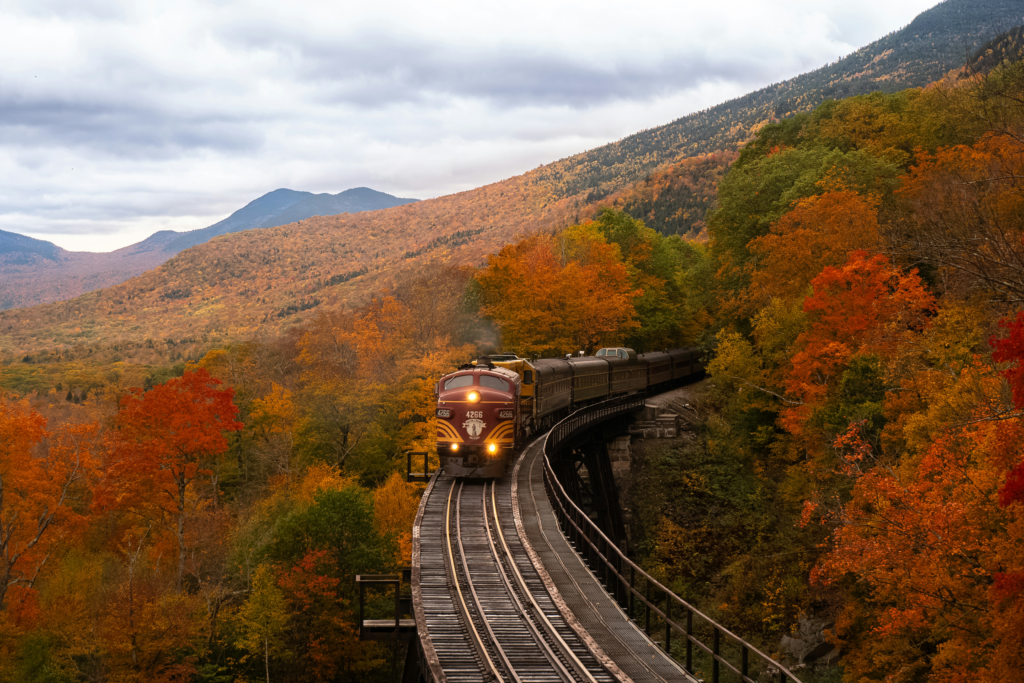
Night trains are an interesting low impact transport option to explore, producing 28 times less GHG than air travel, according to a study by IEA and Back on Track. As well as generating less carbon emissions, night trains also responding to consumers’ search for the experiential and slow travel. Players such as European Sleeper with its new Paris-Berlin line are revitalising the sector and also helping to extend seasonality, whilst also mitigating the fuel price hikes and travel chaos that airlines and passengers will face this summer.
Ongoing shocks to cause further disruption
Those who remain committed to equity and climate action will be better positioned to weather the current turbulence and what comes next.
Even after the conflict in the Middle East is resolved in the coming weeks and months, the ripple effects of the energy shock will be felt for several months afterwards. Yet the need to prioritise climate action and drive equity for local communities should remain paramount.
Competitive advantage will be gained by those who stay on course to decarbonise and generate the best outcomes for communities whilst elevating the travel experience for consumers. Those who remain committed to equity and climate action will be better positioned to weather the current turbulence and what comes next.